
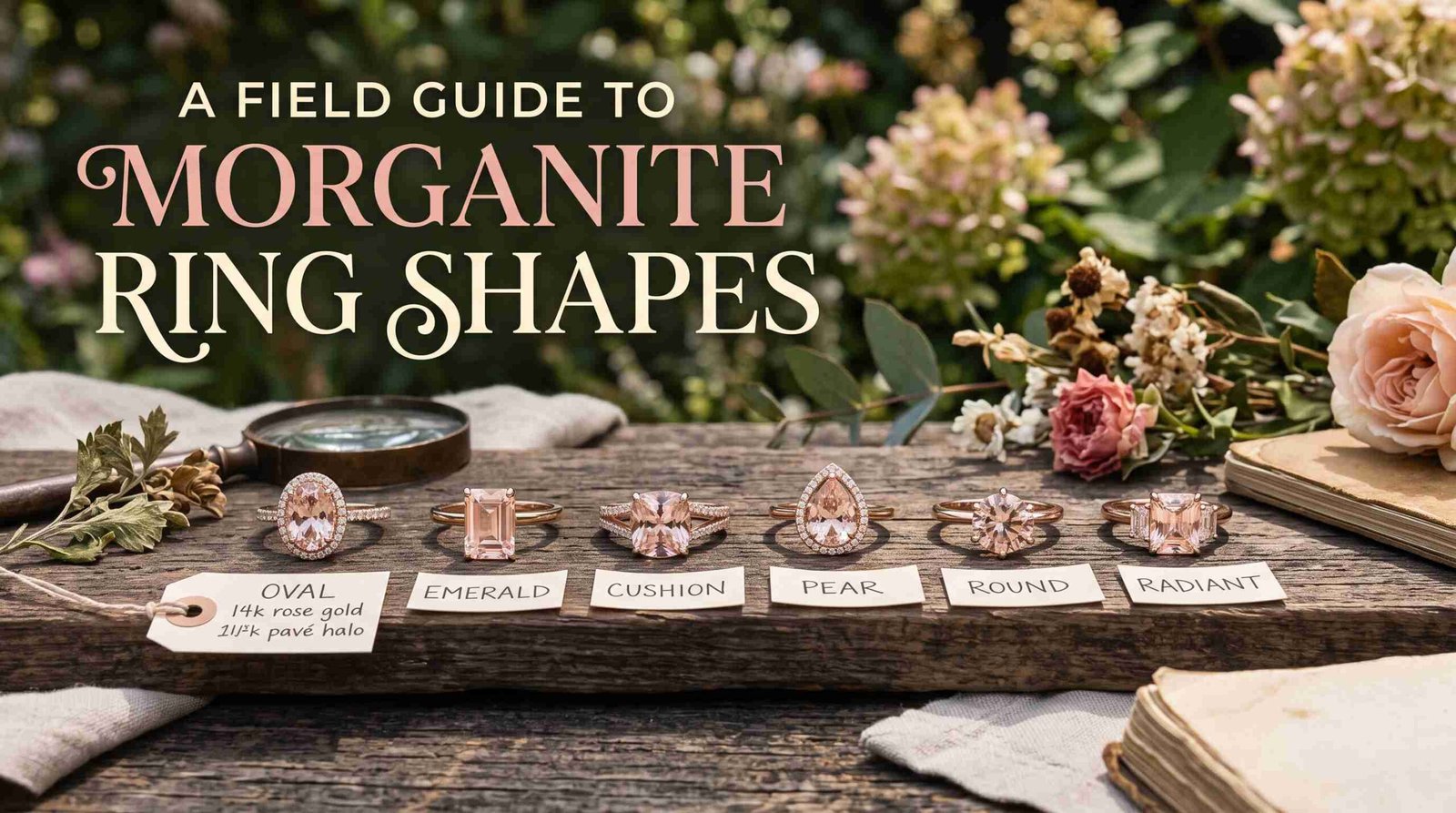
Morganite is one of those stones that rewards a closer look. Its soft pink-to-peach glow shifts with the light, and the way that color reads on the finger depends heavily on how the stone is cut and shaped. Two morganite rings can hold gems of the same weight and the same rough color, yet look completely different once one is an oval and the other a crisp step cut. This guide walks through the main morganite ring shapes, what personality each one carries, and how the cut itself steers the color you actually see.
Before we get into individual shapes, it helps to remember that gem cutting is an old craft with deep roots. If you enjoy background reading, the origins and history of gemstones is a good place to see how faceting styles evolved and why certain shapes carry the associations they do today. With that context in mind, here is how the most common morganite shapes behave.
The Oval: Soft, Elongating, and Forgiving
The oval is probably the most popular way to cut morganite, and for good reason. Its rounded outline echoes the gentle, romantic feel of the stone, while the elongated body stretches visually along the finger. That lengthening effect is flattering on almost any hand, which is part of why so many people gravitate to it without quite knowing why. An oval also tends to face up a little larger than a round stone of similar weight, so you get generous presence from the color.
Because the oval is a brilliant-style cut, it is full of small facets that bounce light around the stone. That liveliness keeps morganite from ever looking flat, and it helps the peach and pink tones blend into a warm, glowing whole rather than sitting in distinct zones. If you want a shape that feels classic without being stiff, the oval is a safe and lovely starting point.
The Cushion: Vintage Warmth With Rounded Corners
A cushion cut looks a bit like a pillow, which is exactly where the name comes from. It has a squarish or slightly rectangular outline with softened, rounded corners, and it carries an unmistakably vintage mood. On morganite, that antique character is a natural fit, because the stone already reads as gentle and nostalgic. The larger facets common in cushion cuts create a slightly softer, more romantic sparkle than the rapid-fire brilliance of an oval.
Cushion morganite tends to pool light in the center of the stone, which can make the color feel deep and saturated. People who love a cozy, candlelit kind of shimmer often prefer this shape. It pairs beautifully with detailed settings that lean into the heirloom feeling, though it is equally at home in a clean, simple mount that lets the pillow shape speak for itself.

 An emerald cut gives morganite a calm, architectural look.
The Emerald and Step Cuts: Calm and Architectural
Emerald and other step cuts take a completely different approach from the brilliant shapes above. Instead of countless tiny facets, they use long, parallel planes cut in tiers, like a series of steps descending into the stone. The result is a rectangular or square window that looks less like a burst of sparkle and more like a still, clear pool. This is a shape for people who prefer restraint and geometry over dazzle.
On morganite, a step cut has a particular advantage: it shows off the clarity and body color of the gem with unusual honesty. You see straight down into the stone, so the peach or pink tone reads as a calm, even wash. Because there is less light scatter to disguise it, the color can also appear slightly softer and more transparent. If you love a modern, architectural look with a quiet kind of elegance, the emerald cut is hard to beat.
The Round: Maximum Brilliance and Balance
The round shape is the most symmetrical of them all, and it is engineered to maximize the return of light. Its precise arrangement of facets sends brightness back to the eye from every angle, which makes a round morganite feel lively and cheerful. Because the outline has no corners or long axis, the color distributes evenly across the whole stone, giving a consistent glow no matter how you turn your hand.
Round morganite works well for anyone who wants a timeless, no-fuss shape that never looks dated. It sits neatly in a wide range of settings and reads as balanced and tidy. The tradeoff is that a round stone can look a touch smaller than an elongated shape of the same weight, since more of the material goes into depth rather than surface spread. For many people, the trade of a little size for a lot of sparkle is well worth it.
The Pear and Teardrop: Graceful and Distinctive
The pear, sometimes called a teardrop, combines a rounded end with a single tapered point. It is one of the more distinctive morganite shapes, and it carries a sense of movement and grace that the symmetrical cuts do not. Worn with the point toward the fingertip, a pear can lengthen the finger much like an oval, while adding a note of individuality for those who want something a little different.
Pears are a brilliant-style cut, so they sparkle generously, but the pointed tip deserves a setting that protects it well. When it comes to color, the tapered end can gather a bright flash while the broad end holds a fuller, richer tone, giving the stone a lovely gradient of light. If you like shapes with personality and a hint of the unexpected, the pear rewards a second glance every time.
Matching a Shape to the Hand
Shape is not only about the stone; it is about how the stone relates to the hand that wears it. As a general rule, elongated shapes such as ovals, pears, and emerald cuts create a lengthening line that flatters shorter or wider fingers. Rounder outlines like the round and cushion feel balanced on longer fingers and add a sense of softness. None of this is a rule you must obey, but it is a helpful starting instinct.
Scale matters too. A broad hand can carry a bolder stone comfortably, while a more delicate hand may prefer a shape that reads refined rather than large. Here is a quick way to think about the character each shape brings:
- Oval: classic, elongating, universally flattering.
- Cushion: vintage, soft, warmly romantic.
- Emerald or step cut: modern, calm, architectural.
- Round: balanced, brilliant, timeless.
- Pear or teardrop: graceful, distinctive, full of movement.
When you are weighing options, it helps to see the shapes side by side on real pieces; you can explore the morganite collection to compare how each cut behaves in different settings and get a feel for what suits your hand.
How Cut Affects Morganite’s Color
This is the point most people overlook. Morganite is often a delicately toned stone, and the cut has a real say in how strong that color appears. Deeper cuts hold more material for light to travel through, which can concentrate and enrich the pink or peach hue. Shallower cuts spread the color over a wider surface, which can make it look lighter and more airy. Neither is better; they simply serve different tastes.
Faceting style matters just as much as depth. Brilliant cuts, with their many small facets, break light into flashes that lift and brighten the overall impression, sometimes making a soft stone feel more vivid. Step cuts, with their broad open planes, let you look straight into the body of the gem, so the true color reads clearly and calmly. If you love a saturated, cozy tone, lean toward a cushion or a deeper oval. If you prefer a clear, gentle wash of color, a step cut will show it honestly. Understanding this relationship between cut and color is what turns picking a shape from a guessing game into a confident choice.
The takeaway: there is no single best morganite shape, only the one that fits your eye, your hand, and the mood you want the stone to carry. Start with the feeling you are after, whether that is vintage warmth, modern calm, or lively brilliance, then let the cut and color guidance above narrow the field. Once you know how shape steers both proportion and color, every morganite ring you look at becomes easier to read, and easier to love.
Related Reading: Advanced Underground Exploration and the Role of Modern Detection Technology — full guide
Related Reading: How to Choose the Best Mapping Software for Sales Reps: A Comprehensive Field Sales Guide